AI-DLCs
non-SDLC process agentification
The agentic-delivery pattern that works in software — spec as the artifact, agents doing the body of the work, humans at the gates — transfers to any lifecycle with a versioned artifact and an acceptance test, and the firm's own analytics delivery is the first such lifecycle, not a client's.
Someone ran it in their own harness. Artifact, no protocol. Decays fast.
Confidence
55%human-committedExpiry
6doverdue for reviewLead time
—not yet mainstream · opened 24 Jun 2026Ownership
SKSam Kowalczykmonthly cadenceWhere it is
Every delivery lifecycle Quantium runs has the same shape as an SDLC: a brief, a body of work, a review, an artifact that ships. Analytics delivery, model-risk documentation, procurement responses, policy drafting and claims handling have all been agentified by someone in the firm in Claude Code this year, and the pattern that survived is the same one r-sdlc-spec-first describes — the spec is the artifact, the agent does the rest, humans own acceptance. What is missing is the scaffolding software has had for two decades: version control, CI, a definition of done. The lifecycles that agentified cleanly were the ones where someone had built that scaffolding first. The field is emerging because the pattern is repeatable and nobody has measured it.
Why a Quantium decision hinges on it
Most of Quantium's revenue is analytics delivery, not software delivery. If the agentic pattern transfers, the firm's own delivery cost structure changes before any client's does. It also determines what the firm can credibly sell: agentic SDLC is a crowded market; agentic analytics delivery, model-risk lifecycle and claims handling are not, and they sit inside verticals where the firm already has the buyer.
Field attributes
Position
What is demonstrated, what is hype, what would have to be true.
The shape every position request answers. Signal-tier fields carry a draft; assessed and tested fields carry a validated one.
- 01A product engineer ran an entire analytics deliverable — brief to versioned notebook to client-ready summary — through an agentic loop with a written spec and an acceptance checklist; delivery time 4 days against a 12-day baseline (tried, one instance).
- 02Model-risk documentation for a CPS 230-adjacent credit model was drafted by an agent from the model repo and validated by the risk team with fewer than ten edits (tried).
- 03The lifecycles that agentified cleanly all had a versioned artifact and a written definition of done beforehand; the ones that did not, stalled.
- 01'Agents for every business process.' Processes without a versioned artifact do not agentify; they get a chatbot bolted on.
- 02Claims-handling automation demos that skip the adjudication rule-book. The rule-book is the spec and it is rarely written down.
- 03Vendor 'AI lifecycle platforms' that are SDLC tooling with the word 'software' removed.
- 01A measured result on two lifecycles other than software, with cycle time and rework as primaries, not one engineer's tried result.
- 02Delivery leads outside engineering willing to write a spec before starting — which is the skills gate, and it is cultural.
- 03A versioning and acceptance scaffold for analytics artifacts that a pod can adopt in a week.
- 01Preregister a Type 3 on the firm's own analytics delivery: three pods, spec-first agentic loop, cycle time and rework rate as primaries.
- 02Write the scaffolding — versioned notebooks, acceptance checklist template, definition of done — before any client conversation.
- 03Hold claims handling and procurement until the analytics result lands; they carry regulatory exposure the internal lifecycle does not.
Signals · 9 in this cluster
What the cluster is made of.
Every item carries its source, tier and sightings. Detector-found signal sits beside human drops; downstream they are indistinguishable except by provenance.
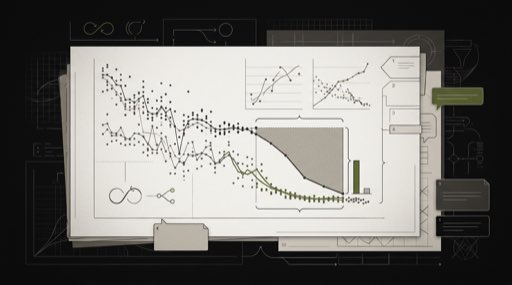
Logged from Claude Code: full analytics deliverable through a spec-first agentic loop in 4 days
A retail churn deliverable — brief, versioned notebook, QA checks, client summary — run with a written spec and an acceptance checklist. Four days elapsed against the pod's 12-day norm. One instance, no control, artifact retained.
extracted claimA spec-first agentic loop cuts analytics delivery time by more than half when the artifact is versioned.
Logged from Claude Code: model-risk document drafted from the repo, accepted with nine edits
Measurement lead drafted a full model document for a credit-scoring model from its repository and validation notebooks. The client's model-risk team accepted it with nine edits, mostly wording. Tried tier; one model.
extracted claimAgents can draft model-risk documentation to a risk function's standard from the repo alone.

'Could your agents do what our claims assessors do, and would APRA let them?'
Asked by an insurer's COO in a steering meeting. Logged by the banking sector owner who was in the room. The second half of the question is the actual field; the first half is a demo.
Rule-Book Extraction for Agentic Claims Adjudication: Where the Rules Are Not Written Down
Studies four insurers' claims processes and finds 40–60% of adjudication decisions rest on rules that exist only in assessors' heads. Proposes extracting them from decision logs before any agent touches a claim; measures agent accuracy at 0.91 with the extracted book and 0.67 without.

Two vendors rename their SDLC agent products to 'AI workflow lifecycle' platforms
Same product, broader positioning. Both claim to 'learn the process from examples' without a written spec. Neither demos on anything but a Jira board. Naming event carried as a demand tell.
Analyst: 'Agentic process automation will replace 30% of BPO seats by 2028'
Headline number, vendor-interview methodology. Assumes processes agentify without formalisation, which is the claim our tried results contradict. Kept as the strongest overstatement.

'Everything is an SDLC if you squint, and squinting is the whole job'
Argues that every professional lifecycle agentifies in proportion to how much of its artifact is versioned and how clearly its acceptance is written. Widely shared in the firm; three drops in a week.
extracted claimLifecycles agentify in proportion to artifact versioning and acceptance clarity, not to how much AI is applied.

APRA letter to ADIs on model documentation expectations under CPS 230
Sets out what a model document must evidence for critical operations. Silent on who or what drafts it, which reads as permissive for agent-drafted documentation with a named accountable owner.
Claims · 4 supporting, 1 refuting
The atoms.
A document cannot go stale; an assertion can. Claims are immutable and stamped with the extractor that produced them, so staleness, diffs and the graveyard operate at claim level.
The spec-first agentic pattern transfers to non-software lifecycles only where a versioned artifact and a written definition of done exist beforehand.
Model-risk documentation can be drafted by an agent from the model repository to a standard a risk function accepts with minor edits.
Claims handling is the highest-value non-software lifecycle for the firm's verticals and the one with the least written-down spec.
Analytics delivery cycle time falls by more than half under an agentic loop with a written spec.
Business processes can be agentified without first formalising their artifacts; the agent infers the lifecycle from examples.
Position history · the diff is the product
3 validation runs against a fixed brief. Confidence 45% → 55%.
Risk function accepted the agent-drafted model document. Claims handling identified as the highest-value target and the least specified. Type 3 on internal analytics delivery proposed; regulated lifecycles held.
- Model-risk documentation can be drafted by an agent from the model repository to a standard a risk function accepts with minor edits.
- Claims handling is the highest-value non-software lifecycle for the firm's verticals and the one with the least written-down spec.
- c-ai-dlcs-4 ↓ 0.35 → 0.2
Scoring · ordinal bands
Agents propose. A named human commits.
Uncommitted scores are visibly marked and never leave the building. Bands, not point estimates — false precision is the tell that a number was generated rather than derived.
Impact
committed · AWTouches the firm's own delivery cost base before it touches any client's.
Timeline
committed · SKInternal analytics delivery now; regulated lifecycles after a measured result.
Cost
agent-estimatedThree pods for six weeks and the scaffolding work. Agent-estimated.
TAM
agent-estimatedAgent-estimated from AU business-process outsourcing and analytics services spend. Uncommitted.
Demand
committed · CDTwo banking clients asked about agentic model-risk documentation; nobody has yet asked for agentic analytics delivery by name.
Workforce readiness
committed · SKEngineering pods write specs; analytics pods do not. The gate is skills and it is the firm's own.
Relevance · per vertical
Why it matters here, or explicitly does not.
Ranking is per vertical, not global. Sector owners commit notes against agent drafts.
Model-risk documentation under CPS 230 and the model-governance standards is a lifecycle with a versioned artifact and a reviewer. It agentifies cleanly.
Mechanism · Agent drafts the model document from the repo; risk function owns acceptance; every edit is logged.
Claims handling is the largest lifecycle in the vertical and the one where the adjudication rules are least often written down. High value, high spec debt.
Mechanism · Rule-book extraction first, then agentic triage against it; adjudicators own acceptance.
Policy drafting and tender evaluation both have a versioned artifact and a review gate. Procurement rules on AI use in evaluation are unsettled.
Mechanism · Agent produces the drafting body under a written brief; a named officer signs. Blocked on DTA guidance for evaluation use.
Range-review and promotional-planning cycles have the shape but not the scaffold. Waiting on the analytics-delivery result.
Mechanism · Would need versioned range-review artifacts before the pattern applies.
Red team · the strongest case against
The strongest case against: software agentified because it had thirty years of tooling that makes every artifact diffable, testable and revertable. Non-software lifecycles do not have that scaffold and building it is most of the work — which means this field is really a change-management programme wearing an AI label, and change-management programmes are where consultancies go to lose margin.
- —Every tried result comes from an engineer who already thinks in specs and version control. The pods that would carry the pattern do not, and the evidence for cultural transfer is zero.
- —The 4-day versus 12-day result is one deliverable by one engineer with no control. It is a tried tier result being read as a finding.
- —Claims and procurement carry regulatory exposure; a wrong adjudication or an AI-tainted tender evaluation is a public failure, and the spec debt in both is exactly where an agent fills the gap with plausible invention.
Source diversity
- Internal tried findings35%
- Operating-model practitioners20%
- Insurance / risk research20%
- Vendor / analyst / regulator25%
A field supported by one epistemic community is a flag, not a finding.
Cross-pollination · typed joins
Connected, not merely similar.
Enabling, compounding, substituting, blocking. A satisfied dependency trigger is a far stronger signal than semantic proximity.
The spec-first pattern and its evidence come from ai-sdlc; this field is its generalisation.
Unversioned agent output across analytics pods is org slop by another name; without the scaffold, this field makes that field worse.
The lab's own research delivery is a lifecycle; the same scaffold measures it.
Cycle time and rework on analytics delivery are readable from the firm's own telemetry, which is the ROI evidence base Nightingale wants.
Share graph
Provenance running forward.
Discovery, not accountability. No counts, no rankings, no rollups to managers.
Convergence · who else is here
- OGOllie Grant · Product engineer2 drops
- SKSam Kowalczyk · Research engineer · SDLC2 drops
- CDClaire Dubois · Sector owner · Banking2 drops
- JPJun Park · Measurement (Nightingale)1 drop
- DSDev Sharma · Sector owner · Retail1 drop
- ?Anonymous · Anonymous drop1 drop
- RMRohan Mehta · Exec sponsor1 drop
Several people’s drops meet here. An informal working group already exists and probably does not know it.
Lineage
What this field produced, and what it killed.
Experiments, recommendations and graveyard entries stay attached. The reasoning that killed a claim is the reusable asset.
No experiments, recommendations or graveyard entries yet. That is what a candidate looks like.
Open questions · return to the pile
Every run leaves a record. Separately, its question either closes or returns to the pile with notes — which is what the next person proposing the same thing will see.
- 01Do analytics pods adopt spec-first working when the scaffold is handed to them, or only when an engineer is in the pod?
- 02How much of a claims rule-book can be extracted from decision logs before an assessor has to be interviewed, and who owns the extracted book?
- 03Does the pattern's cycle-time gain survive when the deliverable has a client reviewer rather than an internal one?