Lab outcomes visibility
Research that is published and not consumed is indistinguishable from research not done; instrumenting opens, citations and reach — and pushing digests instead of waiting for pulls — is the C.3 KPI and the cheapest lever on whether the lab's work changes anything.
A validation run. Researched position, no experiment.
Confidence
56%human-committedExpiry
43duntil review · 16 Oct 2026Lead time
—not yet mainstream · opened 19 May 2026Ownership
AWAdam Witanowskimonthly cadenceWhere it is
Opened under pressure: the FY27 exec scorecard carries KPI C.3, 'visibility of access to enable measurement of reach', and the lab had no instrument for it. The first ninety days of library telemetry showed opens concentrated in four people, who account for 61% of all reads; de-duplicated per person, reach is a small number the lab had been rounding up. A field experiment at a large consultancy found push digests roughly tripled reach over pull, with the effect decaying after eight weeks. Opens are not consumption: the citation that matters is the one in a pitch deck, and nothing captures it. Per-person read telemetry on internal documents is also a staff-privacy question the KPI's author did not consider.
Why a Quantium decision hinges on it
The sponsor's scorecard has this KPI on it whether the lab likes it or not, and the number it produces will be read as the lab's reach. A naive opens count flatters; a de-duplicated one is honest and small. Pushing per-vertical digests to sector owners is the cheapest thing the lab can do to move the honest number, and citation-in-pitch is the one that would show the firm's decisions changing — which is what the effectivity field needs and cannot get without this one.
Field attributes
Position
What is demonstrated, what is hype, what would have to be true.
The shape every position request answers. Signal-tier fields carry a draft; assessed and tested fields carry a validated one.
- 01Library opens over ninety days: 412 opens, 61% from four people, 38 distinct readers. The honest reach number is 38, not 412 (Nightingale run 1).
- 02Per-page telemetry via MCP took one product engineer an afternoon; the instrument was never the hard part.
- 03The consultancy field experiment: push digests roughly tripled reach against pull for eight weeks, then decayed to about 1.6× as digest opens fell.
- 01Opens as reach. Four people refreshing a page is not the firm reading the lab.
- 02More venues. A Confluence page, a Slack channel and a newsletter of the same content reached the same 38 people three times.
- 03Engagement dashboards from the workplace platforms. They count views and cannot see the citation in a pitch, which is the only consumption that changes a decision.
- 01A citation capture path from pitch material — Engel's pipeline records — into the graph, so consumption is measured where it matters.
- 02A per-person telemetry policy staff accept: aggregated by team above a threshold, never individual, agreed with people and culture before it is a KPI.
- 03Digest content that survives the eight-week decay, which probably means per-vertical and per-role rather than one lab newsletter.
- 01Report C.3 as de-duplicated readers and citations-in-pitch, not opens, and say so on the scorecard.
- 02Ship per-vertical push digests to sector owners fortnightly and measure the decay ourselves.
- 03Run a Type 2 with Engel on capturing library citations from pitch decks; if it works, that is the numerator the effectivity field needs.
Signals · 10 in this cluster
What the cluster is made of.
Every item carries its source, tier and sightings. Detector-found signal sits beside human drops; downstream they are indistinguishable except by provenance.

FY27 exec scorecard, KPI C.3: 'visibility of access to enable measurement of reach'
The KPI that opened the field, dropped by the sponsor with the note 'this one has your name on it'. No definition of reach, no instrument, quarterly reporting from October. The lab's job is to make the number honest before someone else makes it large.
extracted claimThe lab will be measured on reach whether or not it defines the term.

Nightingale run 1: ninety days of library reads — 412 opens, 38 distinct readers
Measurement run over the telemetry from June to August. Opens 412, distinct readers 38, median dwell 40 seconds, four people at 61% of opens, health practice near zero. The honest reach number and the one going on the scorecard.
extracted claimDe-duplicated reach is an order of magnitude below opens.

'Who actually read the position paper before the pitch?'
Asked in a banking pitch retro after the team cited a lab position that had been superseded. Nobody could say who had read the current version. Logged as demand for citation capture; it is the sponsor's question in a different room.

Workplace platform ships per-reader engagement analytics for internal publications
Named-reader open and dwell reporting on internal posts, on by default. Two firms publicly rolled it back after staff objections within a month. The privacy question arriving as a product.

Logged from Claude Code: page telemetry on the library shipped via MCP in an afternoon; 61% of opens from four people
Product engineer logged from a session: open and dwell events on every library page, written to the graph through the MCP write path. First fortnight of data showed four readers dominating. Flagged that per-person reads on colleagues' documents would need an aggregation rule. Tried tier.

docs-pulse — privacy-preserving read telemetry for documentation sites
Open-source telemetry that aggregates reads above a configurable group threshold and never stores a reader id. The aggregation rule we adopted came from its default configuration.
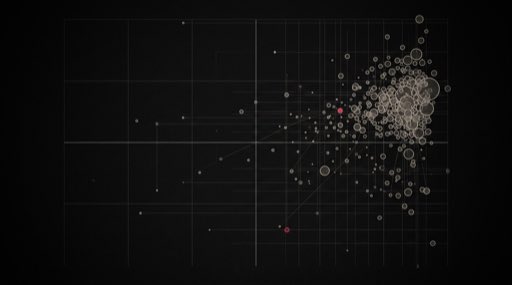
Analyst note: median internal research report at professional-services firms reaches eleven readers
Survey of research and insight functions at 60 firms. Median distinct readers per report: eleven. Median citations in client material: not measured by any respondent. Our 38 is above the median and the citation gap is universal.

Push Versus Pull in Internal Knowledge Systems: A Field Experiment at a Large Professional-Services Firm
Randomised digest delivery across 2,100 staff for sixteen weeks. Push tripled distinct readers for eight weeks, then decayed to about 1.6× as digest opens fell. Per-role digests decayed more slowly than a firm-wide one.
extracted claimPush beats pull on reach, with a decay that per-role targeting slows.

'Research that ships: moving a lab from publish to push'
A corporate lab head on replacing the lab newsletter with per-team digests and measuring distinct readers. Same summit as the effectivity talk; dropped by the measurement engineer with the note 'this is the instrument, not the answer'.

'Nobody reads your internal wiki, and adding a newsletter will not help'
Argues that duplicating content across venues reaches the same readers repeatedly and that the fix is routing to the person who needs it at the moment they need it. The argument against the more-venues approach the lab was about to take.
Claims · 4 supporting, 1 refuting
The atoms.
A document cannot go stale; an assertion can. Claims are immutable and stamped with the extractor that produced them, so staleness, diffs and the graveyard operate at claim level.
Library opens are concentrated: four people account for 61% of reads, so any reach figure must be de-duplicated per person or it flatters by an order of magnitude.
Opens are not consumption; citation in a pitch is the measure that reflects a decision changed, and nothing currently captures it.
Push digests roughly triple reach against pull for about eight weeks, then decay to under 2× as digest opens fall.
Per-person read telemetry on internal documents is a staff-privacy question; reads must be aggregated above a team threshold before they become a KPI.
Publishing the same content to more venues raises reach.
Position history · the diff is the product
3 validation runs against a fixed brief. Confidence 42% → 56%.
Ninety-day measurement: 412 opens, 38 distinct readers, four people at 61%. Opens rejected as the KPI figure; distinct readers and citations-in-pitch proposed instead. Citation capture depends on Engel.
- Library opens are concentrated: four people account for 61% of reads, so any reach figure must be de-duplicated per person or it flatters by an order of magnitude.
- Opens are not consumption; citation in a pitch is the measure that reflects a decision changed, and nothing currently captures it.
- c-lab-outcomes-visibility-4 ↓ 0.3 → 0.2
Scoring · ordinal bands
Agents propose. A named human commits.
Uncommitted scores are visibly marked and never leave the building. Bands, not point estimates — false precision is the tell that a number was generated rather than derived.
Impact
committed · RMIt is on the scorecard. A bad number here costs the lab credibility, not clients.
Timeline
committed · AWFY27 scorecard reports quarterly from October.
Cost
committed · OGTelemetry took an afternoon; digests are an hour a fortnight.
Demand
committed · RMThe KPI exists and has a name against it. Demand is one exec and total.
Cost of being wrong
agent-estimatedA wrong reach number is corrected next quarter. The privacy misstep is the only version that is not low. Agent-estimated.
Workforce readiness
agent-estimatedNothing here needs a research engineer. Agent-estimated.
Relevance · per vertical
Why it matters here, or explicitly does not.
Ranking is per vertical, not global. Sector owners commit notes against agent drafts.
The KPI is firm-wide and the digest mechanism is the lab's main route to every sector owner.
Mechanism · De-duplicated reach and citations-in-pitch on the C.3 line; fortnightly per-vertical digests.
The banking sector owner is one of the four heavy readers; the question is whether the rest of the banking practice reads anything, and a per-vertical digest is the test.
Mechanism · Banking digest to the practice, not just the owner; reach measured by distinct readers in the practice.
Health practice reads were near zero in the ninety-day window. Either the content is irrelevant to them or the route is missing; the digest experiment will say which.
Mechanism · Would become relevant if a health digest produces distinct readers; otherwise the finding is about the content.
Red team · the strongest case against
The strongest case against: the lab is being asked to count its own audience, and counting is not the problem. If 38 people read the library in ninety days, the fix is the content and the sector owners, not the telemetry. Instrumenting reads on internal documents also turns the lab into the team that watches what colleagues open, which is a reputational cost the KPI does not price.
- —The push effect decays to 1.6× in eight weeks in the one study we have. A fortnightly digest is a newsletter, and every firm already ignores several.
- —Citation-in-pitch is the right metric and the lab cannot measure it without Engel access that has not been granted. The field's best claim depends on a data path that does not exist.
- —Per-person telemetry on internal reading is the kind of thing that ends up in a staff-survey comment. The aggregation threshold is a policy, not a safeguard, until people and culture sign it.
- —A KPI about visibility invites optimising visibility. The lab could hit C.3 by pushing more and validating less, which is precisely the failure the effectivity field warns about.
Source diversity
- Knowledge-management research30%
- Research leadership / practice20%
- Vendor / open-source20%
- Internal / sponsor / Engel30%
A field supported by one epistemic community is a flag, not a finding.
Cross-pollination · typed joins
Connected, not merely similar.
Enabling, compounding, substituting, blocking. A satisfied dependency trigger is a far stronger signal than semantic proximity.
Share graph
Provenance running forward.
Discovery, not accountability. No counts, no rankings, no rollups to managers.
Convergence · who else is here
- RMRohan Mehta · Exec sponsor1 drop
- OGOllie Grant · Product engineer1 drop
- AWAdam Witanowski · Lab Director (acting)1 drop
- CDClaire Dubois · Sector owner · Banking1 drop
- JPJun Park · Measurement (Nightingale)1 drop
Several people’s drops meet here. An informal working group already exists and probably does not know it.
Lineage
What this field produced, and what it killed.
Experiments, recommendations and graveyard entries stay attached. The reasoning that killed a claim is the reusable asset.
No experiments, recommendations or graveyard entries yet. That is what a candidate looks like.
Open questions · return to the pile
Every run leaves a record. Separately, its question either closes or returns to the pile with notes — which is what the next person proposing the same thing will see.
- 01Can citations in pitch material be captured from Engel without naming the engagement, and who has to approve it?
- 02Does a per-vertical digest slow the eight-week decay, or do we just get four newsletters ignored instead of one?
- 03What aggregation threshold do people and culture accept before per-team reads become a scorecard line?